

Miniaturization in wearables - opportunities and challenges for hardware development
The beginning of vital sign tracking using wearables can be traced back to Polar's fitness watches in the 1980s, which displayed circulatory data measured with a chest strap. In 2006, the Nokia 5500 Sport was released, which used a 3D accelerometer to track movement. Fitbit was founded in 2007, and almost everyone associates fitness trackers with the US company. Initially, these were simply pedometers worn on trousers. Later, the fitness trackers could measure heart rate and monitor sleep.
Apple entered the market in 2015 with the Apple Watch, which included heart rate monitoring, sleep analysis, and GPS tracking. Other manufacturers such as Xiaomi, Samsung, and Garmin followed suit. With each new release, the devices were expanded to include more features, such as ECG measurements, while battery life was extended, and the design was made smaller and lighter.
The Finnish company Oura then took miniaturization to the extreme, integrating all these functions into a smart ring.
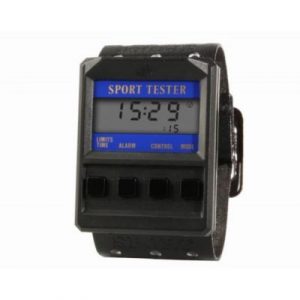
Polar Sport Tester PE 2000 | 1977
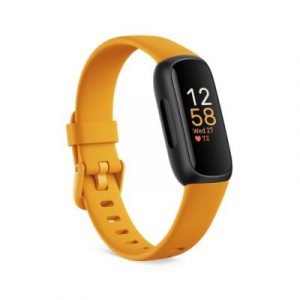
Fitbit Inspire 3 | 2022
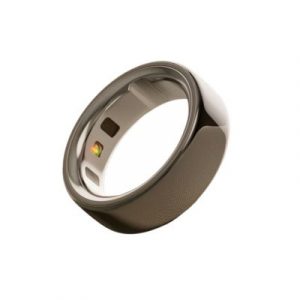
Oura smart Ring Gen. 4 | 2024
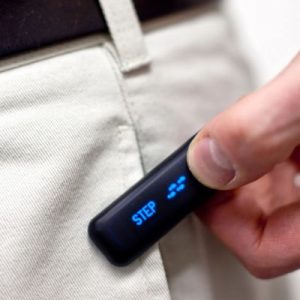
Original Fitbit as a trouser clip | 2009
Wearables in health monitoring
Users are no longer just athletes and recreational sports enthusiasts looking to improve their performance; wearables are also finding applications in health monitoring. In addition to the functions described above, they can also monitor oxygen saturation, body temperature, respiratory rate, blood pressure, electrodermal activity, and blood glucose levels. Falls can be detected. Furthermore, cardiac arrhythmias and heart rate variability can be recorded via the ECG function. This can be particularly beneficial for the elderly or people with chronic illnesses. For example, people with Parkinson's disease, as we have previously discussed in... this blog post have presented.
Why miniaturization is crucial in wearables
Miniaturization offers significant advantages, which we will now discuss in more detail. First and foremost, it increases comfort and acceptance, because the more discreet and comfortable the wearable is, the more likely it is to be worn continuously. This enables continuous monitoring of health data. Would you prefer to wear the Oura Ring or a chest strap every day?
New fields of application thanks to compact designs
The smaller design also opens up new areas of application. In addition to continuous monitoring of sleep and activity using a wrist tracker, hearables can also be used, i.e., biomonitoring using headphones.
Technical challenges of miniaturization for hardware developers
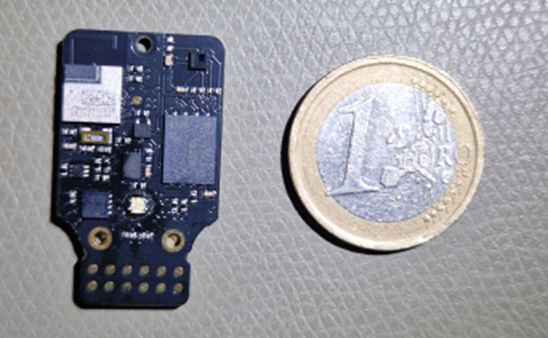
The size of our circuit board for a gait analysis sensor
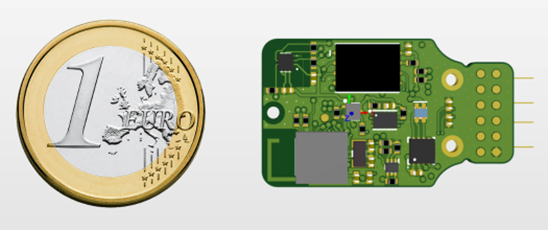
Integrating all these functions into the smallest possible housing increasingly presents hardware developers with major challenges.
Initially, there would be the problem of... Energy supply. The functionality is expanding; Bluetooth integration with an app is usually standard. The tiny battery has to power not only the sensors but also the powerful CPU, radio modules, and possibly a display. The focus is primarily on energy-efficient, low-power processors, but energy harvesting can also be used. This involves extracting energy, for example, from the user's movement.
When sensors, antennas and processors have to fit onto ever smaller circuit boards, the layout It must be meticulously planned. Otherwise, signal interference or electromagnetic disturbances can quickly occur.
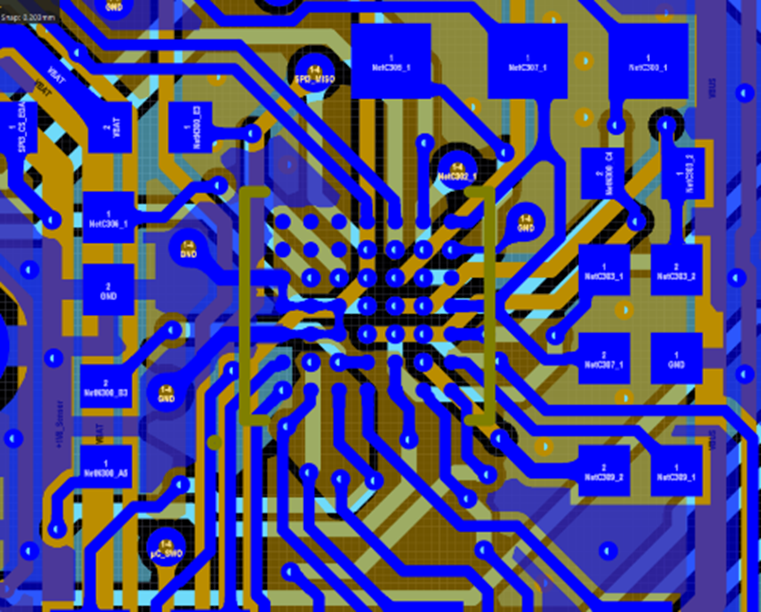
The size of the wearable is largely determined by the size of its components. Miniaturization has always been a key focus for electronic components. We ourselves have already used sensors and processors in BGA packages with a 0.35 mm pitch.
The routing of such components involves the use of special techniques such as stacked microvias or buried vias, which place high demands on the manufacturing process of the printed circuit boards and thus also increase costs.
Practical example: Miniaturized sensors in mobile gait analysis
One example of the benefits of miniaturization is modern gait analysis, as discussed in the blog article about Portabiles (to the blog) discussed. Previously, this technology was limited to specialized laboratories with expensive high-speed cameras and force plates. Today, this technology is found in a clever shoe insole or a sensor on the shoe. This development is revolutionizing preventive medicine, sports, and rehabilitation.
A gait analysis sensor can contain many sensors; an accelerometer in combination with a gyroscope measures acceleration and rotation. This data can then be augmented with, for example, a magnetometer or pressure sensors.
Algorithms can be used to provide meaningful information about stride length, gait speed, rhythm, symmetry, or even the range of motion of joints.
This allows various illnesses to be detected and treated at an early stage.
1. Neurological diseases & neurodegenerative diseases
- Parkinson's disease (knee joint) [1]
- Alzheimer's disease and other dementias [2]
- Multiple sclerosis [3]
2. Orthopedic and musculoskeletal disorders
- Osteoarthritis (knee joint) [4]
- Chronic back pain [5]
3. Fall prevention in older people [6]
4. Sport and performance optimization [7]
5. Rehabilitation after injuries [8]
Conclusion: Miniaturization as the key to the next generation of medical wearables
The journey of wearables – from the bulky chest straps of the 80s to gait analysis electronics in the insole – is an impressive success story of Miniaturization. She has transformed these devices from niche products for athletes into ubiquitous companions that provide deep insights into our health and well-being. But as this article has shown, this path is anything but trivial.
The increased user-friendliness and understated design of modern medical technology contribute significantly to its acceptance in everyday life. This results in the continuous collection of high-quality health data – an essential foundation for new clinical applications.
For hardware development, this means maximum functionality in minimal space with a strictly limited energy budget. These requirements are driving development into highly specialized areas – such as ultra-efficient low-power chips and energy management systems. In addition, efficient product development also requires expertise in medical technology processes, documentation, and regulatory approval requirements.
This is precisely the interface where we at MEDtech Ingenieur operate. We are happy to support you in miniaturizing your hardware for your next-generation medical device.
Ultimately, miniaturization in wearables is therefore far more than just a technical gimmick, but an important pillar for seamlessly and invisibly integrating technology into our lives.
Do you need support with miniaturizing your hardware or with the associated challenges? Or are you interested in a wearable device for gait analysis? Then please contact us. here.
Funded by...
the Federal Ministry for Research, Technology and Space
The project „Portable NoFreeze“Developed a system for the early detection and prediction of Parkinson's-related stiffness during walking. Using intelligent motion sensors and AI-based algorithms, the risk of falls is to be detected in real time and those affected warned at an early stage.”.

Sources
[1] Del Din, S. et al. (2021). Gait analysis with wearables can accurately classify fallers from non-fallers in Parkinson's disease.
[2] Mc Ardle, R., et al. (2020). Differentiating dementia disease subtypes with gait analysis: feasibility of wearable sensors?
[3] Moon, Y., et al. (2020). Monitoring gait in multiple sclerosis with novel wearable motion sensors.
[4] Kobsar, D., et al. (2020). Wearable Inertial Sensors for Gait Analysis in Adults with Osteoarthritis—A Scoping Review.
[5] Van Dijke, J., et al. (2021). A wearable device for functional gait monitoring in patients with chronic low back pain
[6] Schwenk, M., et al. (2019). Interactive Balance Training Integrating Sensor-Based Wearables for Fall Prevention in Older Adults - A Pilot Study.
[7] Willy, RW, & Davis, IS (2023). The Use of Wearable Sensors for Preventing, Assessing, and Informing Recovery from Athletic Injuries.
[8] Johnston, W., et al. (2021). A Wearable Sensor Platform for Objective Monitoring of Function in ACL-Reconstructed Patients.