

In wireless distributed systems, each node runs its own hardware clock. Even identical embedded systems start with different time values, tick at slightly different frequencies, and experience variable delays when sending, receiving, and processing data. Without synchronization, a system with a ±20 ppm quartz crystal can drift apart by several milliseconds in just a few minutes, which is problematic for many medical applications.
Why synchronicity is crucial
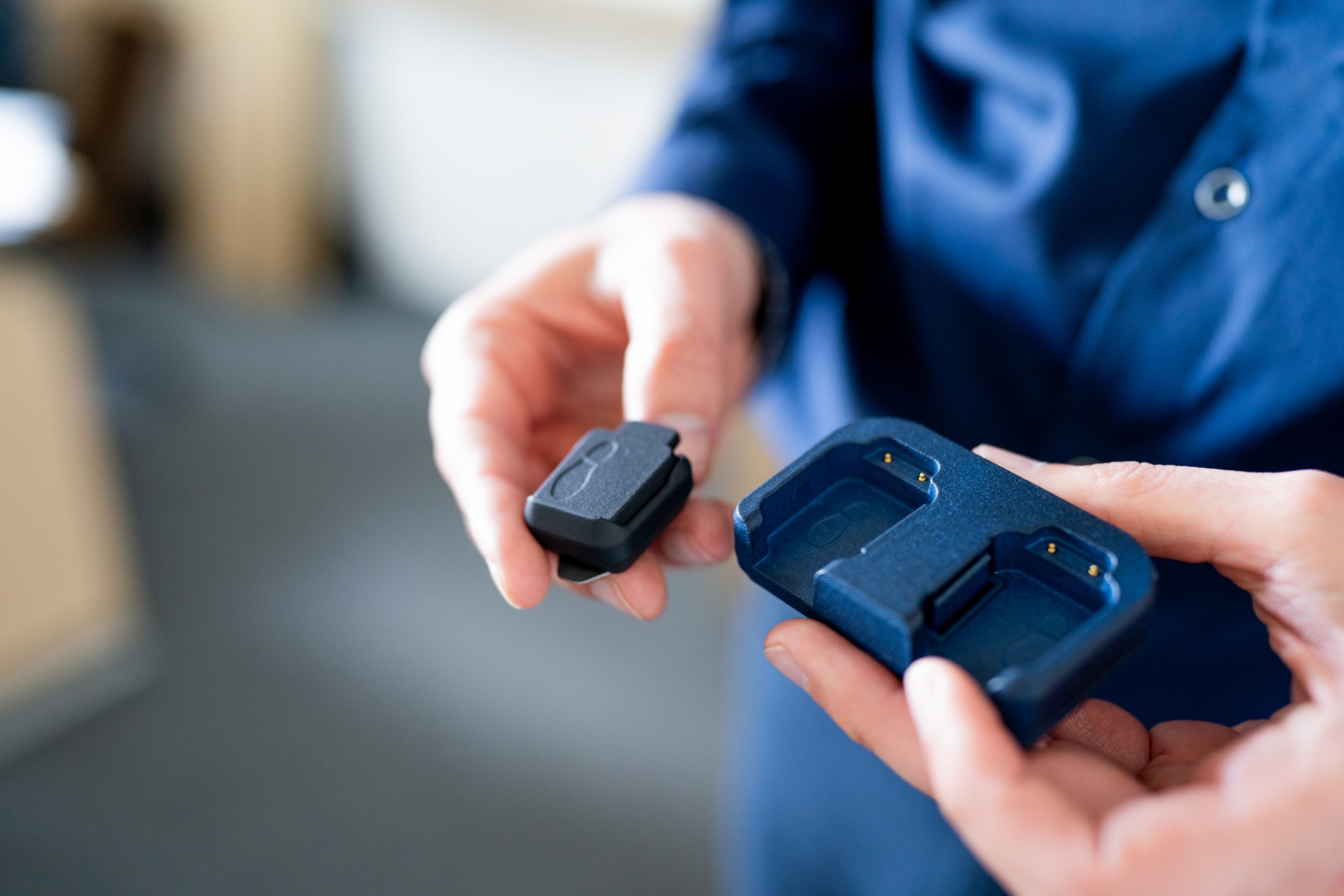
In medical technology, for example in gait analysis or the control of orthoses, multiple sensors must work in precise sync. Our solution at MEDtech Ingenieur enables the synchronization of BLE devices with an accuracy below [insert value here]. 50 microseconds with simultaneous data transmission. This allows movement data from foot sensors and body modules to be precisely combined wirelessly.
Synchronization in action
In the video, we show how two sensors initially drift apart. Then our synchronization logic kicks in: Within a very short time, both signals are perfectly aligned again.
The technical challenges
The causes for time discrepancies are manifold:
- Quartz tolerances (±20 ppm, temperature and voltage dependent)
- Aging and drift
- Fixed radio delays (e.g. radio frontend + PPI chain)
- Jitter through interrupt latency, CPU scheduling, ring buffer
- Package Losses, which lead to cumulative errors
Our solution: The bsync module
We rely on a beacon-based synchronization protocol for nRF52 devices, which combines the following components:
- Hardware timestamp via PPI + TIMER
- Offset and drift estimation with lightweight logic
- Periodic triggers about the Event Generation Unit (EGU)
- Timeslot Management through the Multiprotocol Service Layer (MPSL)
Master-slave roles
- Master: It captures its 1 MHz timer timestamp and transmits it via radio.
- Slave: It receives the packet, records its own timestamp, and calculates offset and drift.
Since both processes execute their routines within MPSL timeslots, their interval becomes the effective synchronization period. In practice, however, timeslots are never perfectly timed. Therefore, our solution is robust against jitter in the microsecond to millisecond range.
Applications beyond gait analysis
- Synchronized vital data recording (e.g. ECG + exercise)
- Multi-sensor tracking in telemedicine
- Neurotechnology with closed-loop systems
- Robotics and prosthetics with real-time sensors
Reliable and fast methods are needed to synchronize the various nodes. Our BLE synchronization technology provides the foundation for new, networked medical devices – precise, robust, and wireless. If you have applications where timing is critical, please contact us. We'll show you how to synchronize sensors down to the microsecond level.