

From October 17 to 21, international experts gathered at Fakuma at the Friedrichshafen Exhibition Center. With over 1,400 exhibitors, this is the second-largest trade fair for plastics in Germany. Current COVID-19 regulations made it possible to visit the fair in person, so we also took the opportunity to learn about the latest developments in the development and production of plastic parts.
Many current trends affect the manufacturing processes of plastic series parts. This particularly includes more environmentally friendly production. To achieve this, the proportion of recycled materials is being increased and the circular economy is being strengthened. Another strategy is the incorporation of additional materials such as paper into plastic batches. During production, a comprehensive assessment of the carbon footprint is being carried out across the entire value chain. To monitor and control processes, machine controls are being upgraded with Industry 4.0 functions.
For us, this year the developments in the area of Additive manufacturing Particularly interesting. Machines are becoming faster across the board. There are larger build volume capacities, higher production volumes, and overall more profitable production. In addition, new materials and preprocessing methods are being developed.
Larger construction volumes
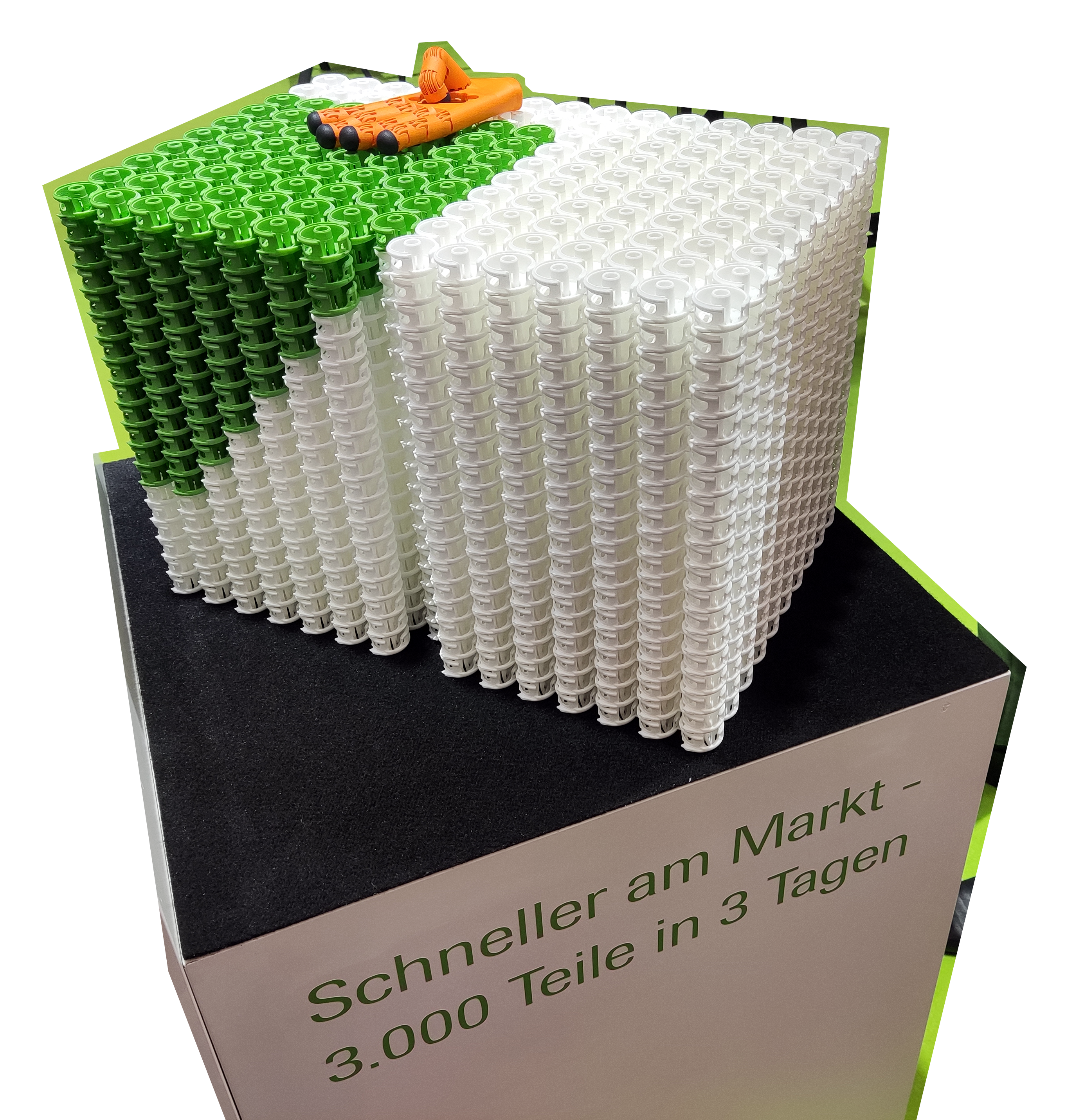
In order to produce more parts in a shorter time or larger parts from a single piece, the machine's build volumes are gradually being enlarged. Depending on the process, there are industrial robots that are equipped with extrusion units to produce larger parts. For the production of components using SLS With the EOS P 770, EOS now offers a build volume of 700 mm x 380 mm x 580 mm.
1zu1 Prototypen GmbH & Co KG.
Preprocessing of additively manufactured parts
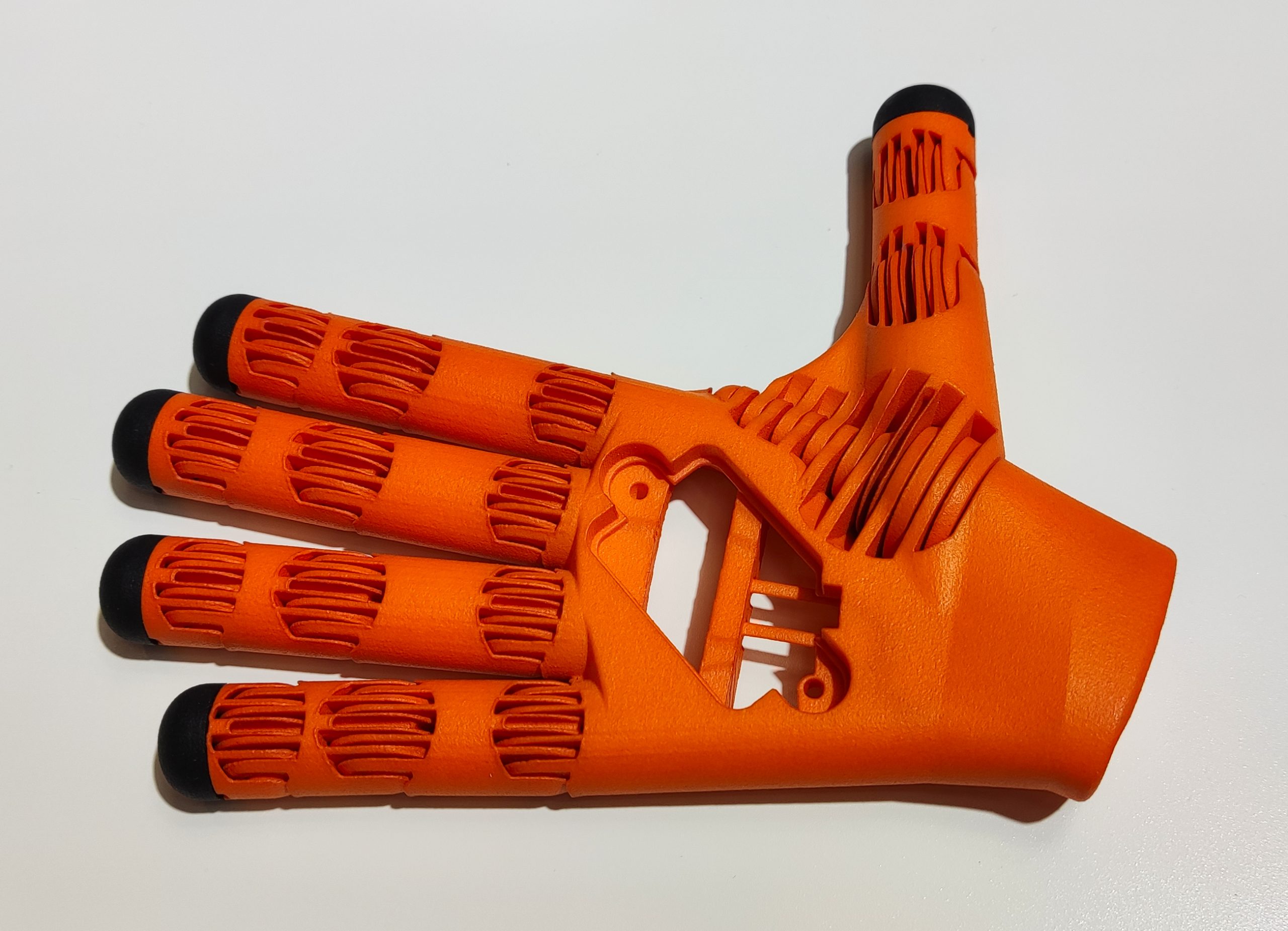
Through appropriate preprocessing, such as chemical smoothing, the surfaces of SLS parts are now indistinguishable from injection-molded parts. On display, for example, was a hand for a medical application with joints and mounts for actuators and sensors. The orange body was manufactured using an SLS build process.
1zu1 Prototypen GmbH & Co KG.
“Silicone printing”
The company innovative (part of the “Arburg Family“) offers the production of soft components using the Liquid Additive Manufacturing (LIMI) process. This allows standard injection molding silicones to be used for the additive manufacturing of silicone parts. Since no support structures are currently used, the range of applications is limited. This technology has only recently entered the market, and we look forward to future developments.
The machine on display produced silicone shoe soles live. In the future, this technology could be an interesting addition to existing prototyping processes for soft components.
Conclusion
The trade fair showcased developments in industry-specific and international social topics. It was particularly rewarding to see these insights in person and to be able to interact directly with the exhibitors. Although remote technologies have received a significant boost due to the coronavirus pandemic, face-to-face communication through events like these is essential. Therefore, we are pleased that the trade fair was able to take place and that we are slowly returning to the pre-COVID situation.