

How are sensors for cardiopulmonary resuscitation validated?
Why is a CPR feedback sensor needed at all?
Cardiovascular diseases leading to cardiac arrest are among the three most common causes of death in Germany. Cardiopulmonary resuscitation (CPR) can be lifesaving. Although the overall situation has improved significantly thanks to the training of numerous first responders and medical advancements, the survival rate remains very low, at approximately 10 percent for cardiac arrest occurring outside of hospitals. [1].
This is also related to the quality of chest compressions. Several factors influence the quality and effectiveness of CPR. Two of the most important are compression depth and compression rate. These parameters should be approximately 5 to 6 cm and 100 to 120 compressions per minute (beats per minute) for an adult; otherwise, the survival rate is significantly reduced. [2].

The CPR feedback sensor tracks and analyzes movements during chest compressions; you can find more information about its development in the [link to relevant section]. Blog Read by Stefan...
Since the quality and efficiency of resuscitation decreases over the course of a resuscitation, even with trained personnel, feedback systems are already well-established in emergency medical services. These systems typically consist of accelerometers attached to the patient's chest to measure compression depth. However, the algorithms used by these sensors are sometimes highly prone to errors, and incorrect readings can have serious consequences for the patient. These algorithmic errors could usually be detected and thus better avoided through appropriate validation. Such validation should be able to replicate the movement sequence during resuscitation as accurately as possible and take external factors, such as the person performing the resuscitation, into account.
For these reasons, MEDtech Ingenieur has developed a CPR feedback sensor for compression depth measurement in an internal research and development project to support improved resuscitation procedures. The feedback sensor is based on the "M-Track Board" (Motion Track Board). This board, a circuit board we developed, incorporates various sensors (gyroscope, etc.) and can be flexibly programmed and further developed for different applications in the field of motion analysis. To ensure reliable validation of this sensor and its algorithms, a test station or test bench must be constructed.
What requirements must a test bench for sensor validation in medical technology meet?
The fundamental requirements for such a test rig are determined by the resuscitation process itself. The test rig should exhibit the same rigidity and size as a human torso when compressed. To ensure that the human influence of the person performing CPR is not excluded from the validation, we will operate the test rig manually using a resuscitation mannequin. To simulate various scenarios, different compression depths will be achievable and recorded by a high-precision measuring system. This data will then serve as the basis for validation (reference).
In addition, such a test bench must also be easy to calibrate and operate.
How can a test rig for indentation depth measurement be implemented to meet our requirements?
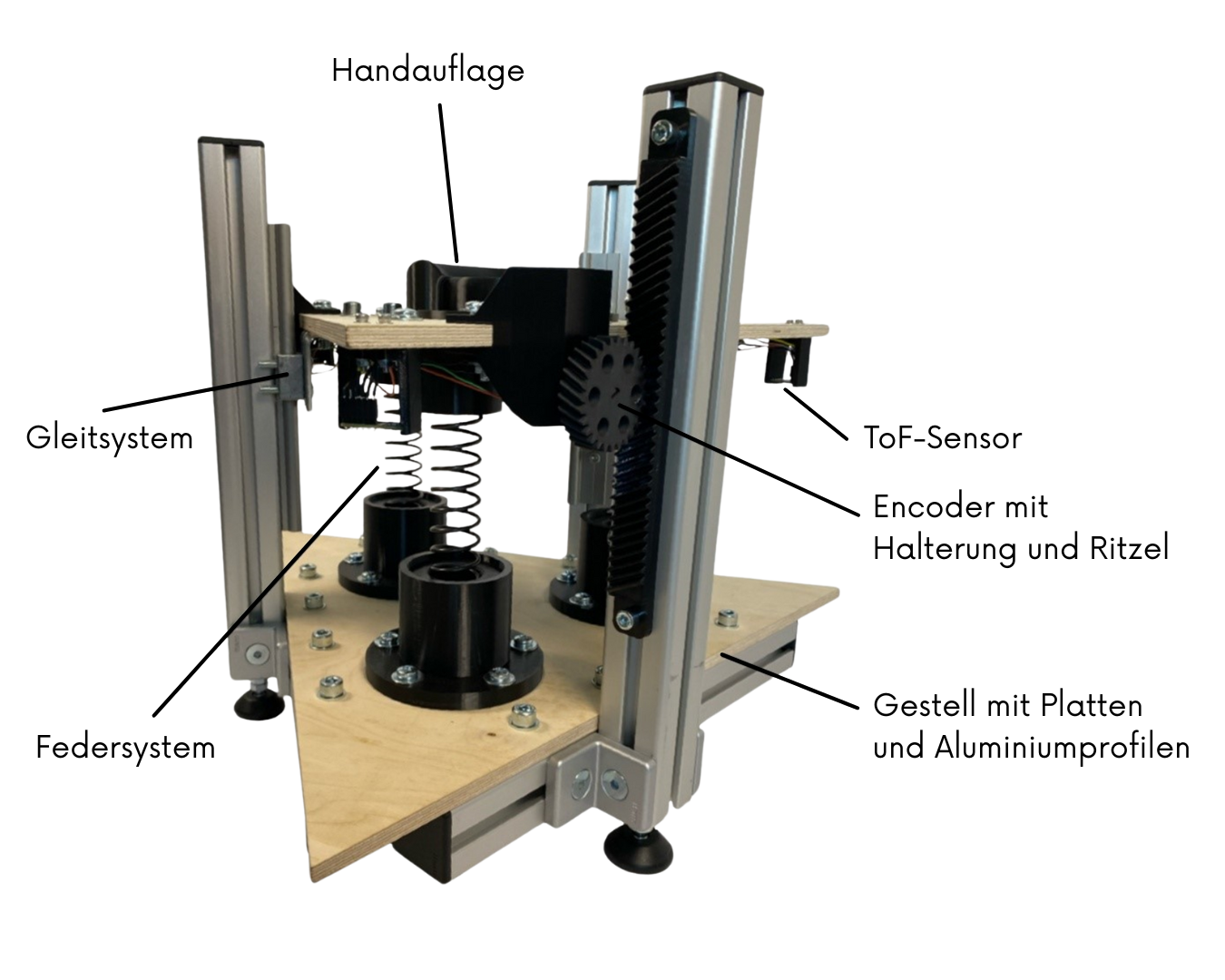
The sum of the requirements and framework conditions leads to the constructive implementation of the test bench, which can be seen in Figure 1.
The operation of the test bench, or more precisely the recording of a series of measurements, proceeds as follows:
- The sensor of the M-Track board to be validated must be connected to the PC/laptop via a serial interface in order to transmit data.
- The test bench must also be connected to the PC/laptop in order to receive data from it.
- Then the actual measurement can begin. During the measurement, the operator presses down on the test rig, mimicking a real CPR, causing the top plate to move in the z-direction without tilting. The springs ensure a rigidity similar to that of the human torso. The movement of the top plate is detected by the test rig's high-precision measuring system.
- After the measurement is completed, the data is saved as a .csv file.
- The results can be automatically plotted and displayed and analyzed on a PC/laptop.
How are measurement data of the indentation depth reliably recorded and evaluated on the test bench?
Highly accurate recording of the indentation data is essential for reliable sensor validation. The test bench's two-stage measurement system consists of three encoders and three time-of-flight sensors. The encoders are located on the test bench's column profiles and detect changes in height.
This is achieved by converting the vertical movement into a rotary movement via a helical pinion and a matching rack mounted on the actuator. The ToF sensors are mounted in the corners on the underside of the top plate and measure by emitting and receiving a light signal. Both sensor types are shown as examples in Figure 2.
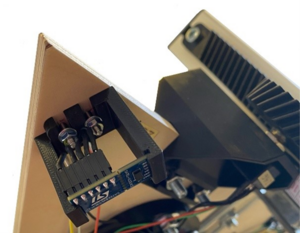
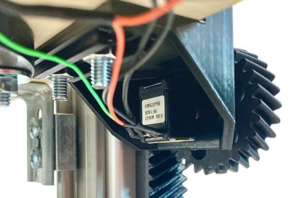
Figure 2: Detailed view of a) the ToF sensor in its holder and b) the encoder on a column profile
The different operating principles of the test bench sensors result in a highly precise measurement as a reference for the external sensor.
What advantages does a specialized test bench offer for the validation of medical sensors?
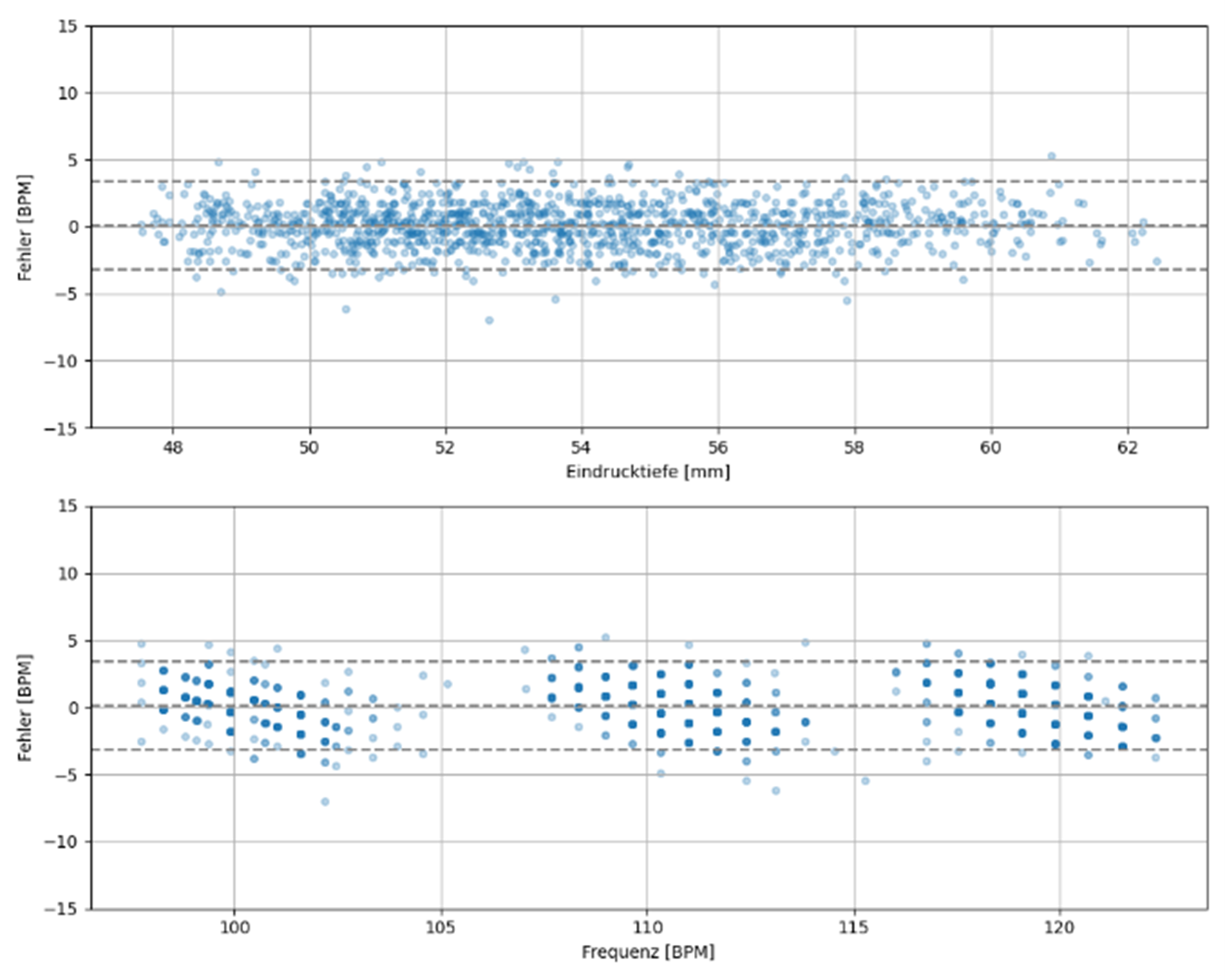
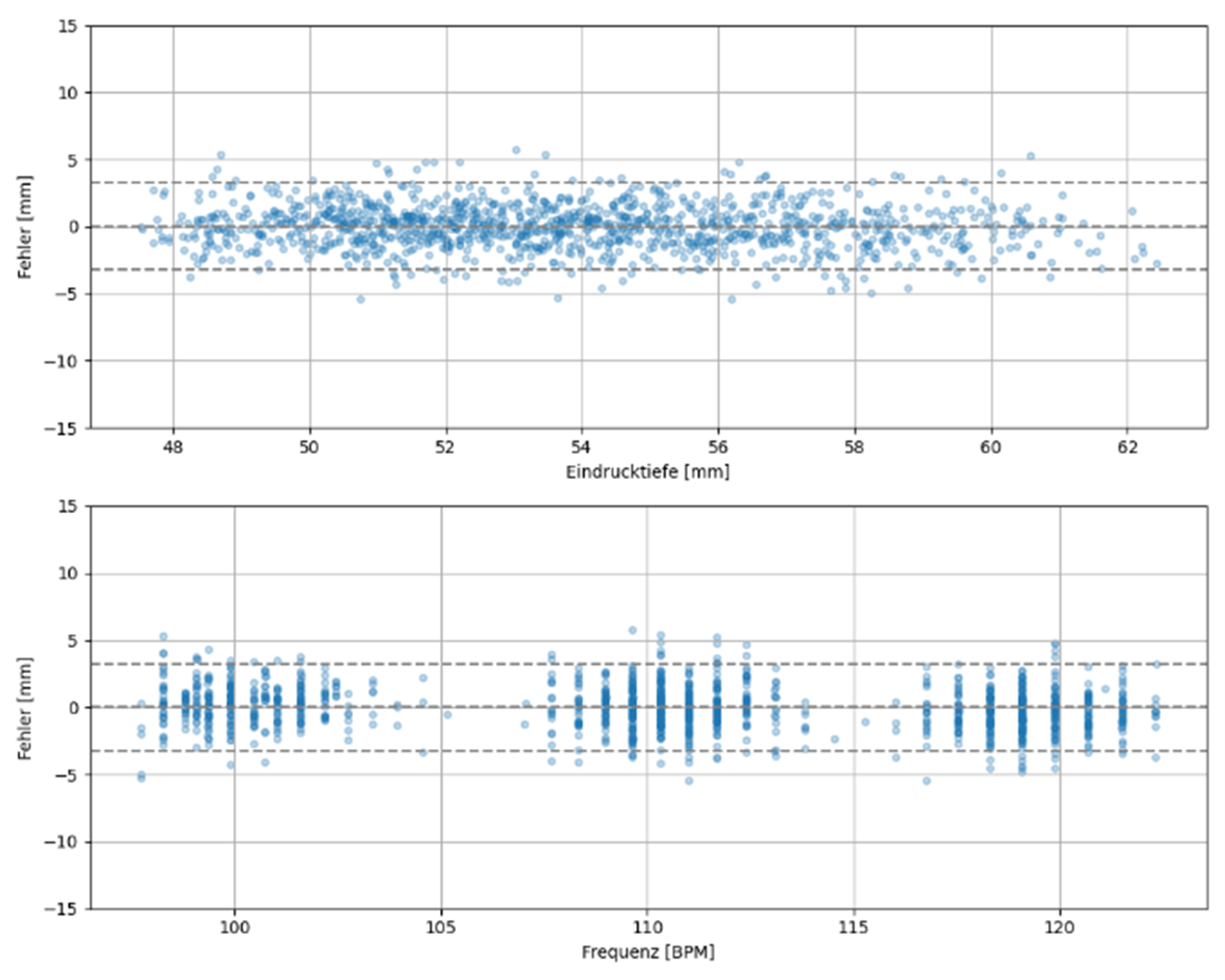
The test bench is ideal for introducing various external influences into the validation process. For example, manual operation makes it easy to vary the frequency and indentation depth over the measurement period and test the algorithm's response to such changes.
The following illustration clearly shows the major advantage of the test bench: the acquisition of large amounts of data is quick and flexible. A separate blog post about the development of the feedback sensor with the MEDtech M-Track board can be found here: CPR feedback sensor by Stefan Höhe.
Do you need a non-binding consultation or support with testing and validating your product? Feel free to contact us and we will help you from the development to the delivery of your products.